Palacio de Bellas Artes
A palace the Revolution finished in a different century
⏱ 1.5-2 hours👤 All ages$
Get Tickets
Get Bellas Artes Tickets
Skip the line · mobile tickets accepted at the door
The building's story is the country's: Porfirio Díaz commissioned the European-facing opera house for the 1910 centennial (Adamo Boari's Italian marble and nouveau curves; the building's weight sinking into the lake-bed clay is the running saga — the palace has settled meters since), the Revolution halted it with the shell standing, and the 1930s completion under Federico Mariscal turned the interior deco (the Monterrey marbles, the Maya-deco chandelier masks, the geometric bronzes) — the two-era building became the republic's culture palace, and the mural commissions of 1934-on filled it with the movement's answer to the Porfirian shell. The Rivera story centers it: Rockefeller Center commissioned Man at the Crossroads in 1932, Rivera painted Lenin into it, the Rockefellers ordered it chipped off in 1934, and Rivera — with photographs and fury — repainted it here within the year, retitled and sharpened (Lenin stays; a syphilitic society-set cameo joined): the fresco is art history's most famous act of defiance, and standing before it is the palace's point.
The visit craft: the mural floors' survey runs 60-90 minutes (Rivera's crossroads first, then Orozco's Katharsis opposite — the pairing is the movement's argument — Siqueiros, Tamayo and the rest around), the Tiffany curtain's viewings tie to performances and scheduled showings (the Folklórico evenings include it lit — the volcano glass glowing is the house moment), the Ballet Folklórico booking (Wednesdays and Sundays traditionally — the spectacle earns its institution status), free-Sunday crowds traded against weekday calm, and the quarter's circuit: the Alameda's promenade, the Correo Mayor's gilded post office across the street (free, gorgeous), the Sears terrace coffee, the Torre Latino deck, and the Madero pedestrian street running to the Zócalo — the palace anchors the centro's essential walk.
Practicals and fit: Avenida Juárez at the Alameda (metro Bellas Artes), murals ticketed cheap (free Sundays), Folklórico booked ahead, closed Mondays. Fit: first trips and art travelers first, couples (the curtain-lit evening), centro walkers — the modern country's one-building explanation.
What to Expect
Format
The marble palace at the Alameda — art-nouveau outside, deco inside, the Tiffany volcano curtain on stage, and the mural floors holding Rivera's recreated Rockefeller fresco beside Orozco and Siqueiros at full fury.
Best Time
Weekdays for calm mural floors (free Sundays crowd); Ballet Folklórico evenings (traditionally Wednesdays and Sundays) light the Tiffany curtain; closed Mondays.
Duration
Ninety minutes for murals and building; an evening with the Folklórico.
Tips
Stand before Man at the Crossroads and read the Rockefeller story — art history's most famous defiance. The Sears café terrace across the street holds THE dome view. Walk Madero to the Zócalo after.
⚡ Quick Picks
Best For
First trips — the centro's icon outside, the modern country's explanation inside.
Families
The volcano glass curtain and the dome-view café terrace carry the visit.
Couples
The Folklórico under the lit Tiffany curtain — CDMX's definitive evening out.
Pair With
The Correo Mayor's gilded post office, the Torre Latino deck, and the Madero walk to the Zócalo.
Time Needed
One centro morning, or the curtain-lit evening.
Ready to book Bellas Artes?
Get Tickets →Frequently Asked Questions
What is the Rockefeller mural story?
Rivera painted Lenin into his 1933 Rockefeller Center commission, the Rockefellers had it destroyed, and Rivera recreated it here in 1934 — retitled, Lenin intact, a society cameo added — art history's most famous act of defiance, in fresco.
What is the glass curtain?
A 24-ton Tiffany crystal stage curtain depicting the Popocatépetl and Iztaccíhuatl volcanoes — one of a kind, assembled in New York — lit for performances and scheduled viewings; the Folklórico evenings include it glowing.
What is the Ballet Folklórico?
Amalia Hernández's regional-dance spectacle — the decades-running institution staging Mexico's dance traditions at opera-house scale, traditionally Wednesdays and Sundays; book ahead and make the visit an evening.
Why two architectural styles?
The Revolution — begun 1904 in Porfirian art-nouveau marble, halted two decades, finished 1934 in art deco: the building's outside-in style shift is Mexican history rendered in architecture.
Where is the famous view of it?
The Sears building's eighth-floor café terrace across the street — the dome against the Torre Latinoamericana — with the Torre's observation deck next door as the paid panoramic upgrade.
More Mexico Attractions
Browse all →
Museo Nacional de Antropología
The greatest museum in the Americas — the Aztec Sun Stone, Pakal's jade mask and the colossal Olmec heads under Chapultepec's umbrella courtyard: every civilization the ruins belong to, explained in one unmissable day.
Frida Kahlo Museum — Casa Azul (Mexico City)
Frida's cobalt-blue house in Coyoacan — where she was born, painted, loved Diego, and died — kept intimate with her studio, dresses, and garden. Mexico City's hottest ticket: book online, well ahead.
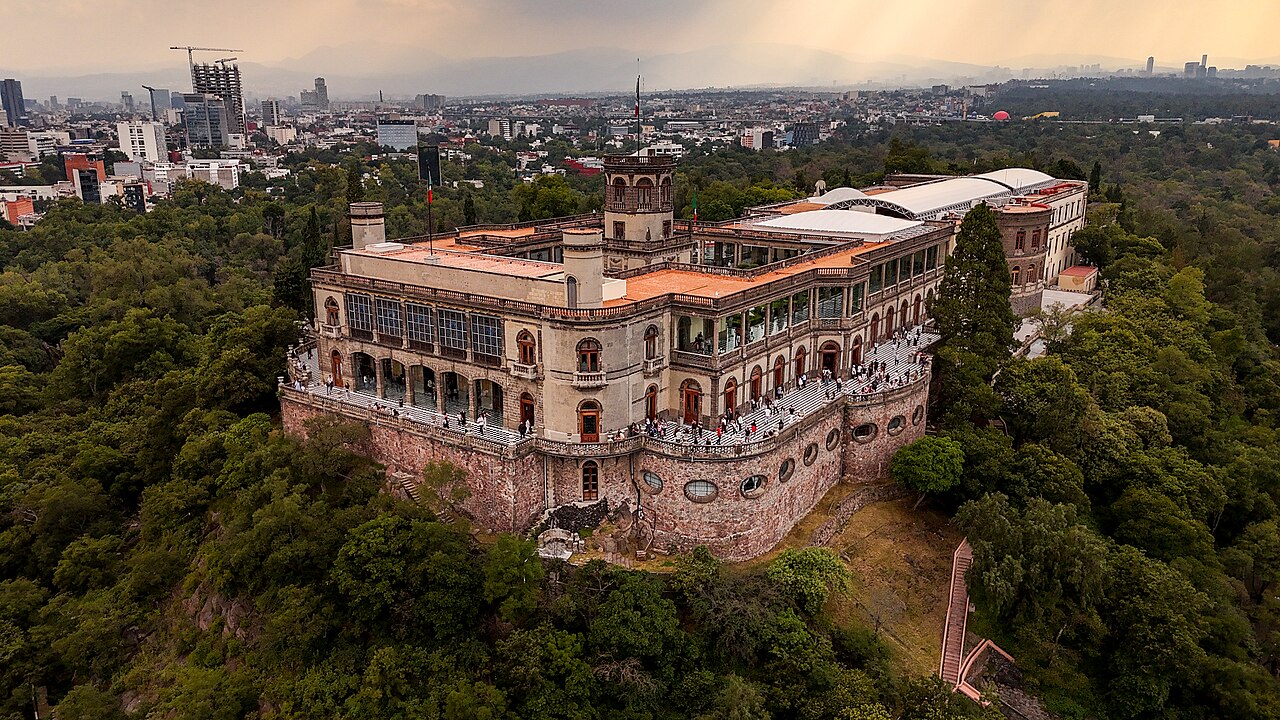
Chapultepec Castle (Mexico City)
The only true castle in the Americas to house sovereigns — Maximilian's hilltop palace above Mexico City, now the National History Museum, with Tiffany-glass halls, heroic murals, and the capital's best viewpoint.